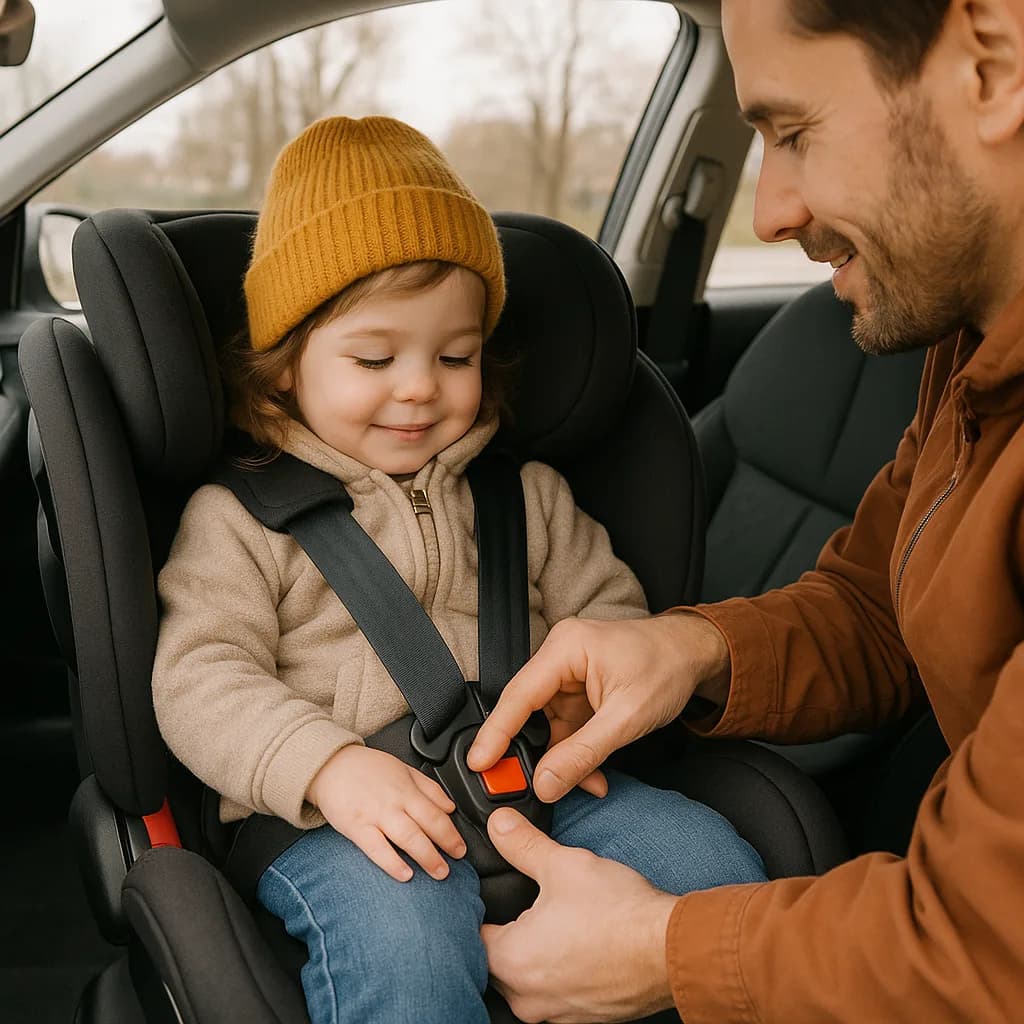
Most Iowa parents add their teen to the family policy without realizing that several Iowa carriers price newly licensed drivers 40–60% lower as named drivers on separate vehicles than as occasional drivers on shared cars.
Why Named Driver Status Changes Your Teen's Rate in Iowa
Iowa carriers apply fundamentally different rating formulas when a teen is listed as the primary driver of a specific vehicle versus an occasional operator of a family car. State Farm, Nationwide, and Auto-Owners — which collectively insure approximately 55% of Iowa households — price teens as named drivers on separate vehicles 40–60% lower than the same teen listed as an occasional driver with access to multiple family cars.
This pricing gap exists because Iowa's rating regulations allow insurers to treat vehicle-specific assignment as a risk-limiting factor. When your 16-year-old is the named driver of a 2015 Honda Civic, the carrier rates that pairing specifically. When the same teen has occasional-driver status on your 2022 SUV and 2020 sedan, the insurer assumes worst-case exposure — rating the teen against the highest-value, highest-performance vehicle in the household.
The decision point happens at policy addition, not renewal. Once you've added your teen as an occasional driver across all vehicles, switching to named-driver status mid-term typically requires a full policy rewrite. Most Iowa families make this choice within 72 hours of their teen receiving a license, often by phone with an agent who defaults to the occasional-driver setup because it requires less paperwork.
Iowa Graduated Driver Licensing and Insurance Implications
Iowa's GDL program creates three distinct insurance phases that directly affect premium calculation. The instruction permit phase (age 14–16) requires no separate coverage if the teen drives only with a licensed adult — the supervising driver's policy covers the vehicle. The intermediate license phase (age 16–17, after holding a permit for at least 12 months) triggers mandatory inclusion on the family policy, even if the teen doesn't have regular vehicle access. The full license phase (age 17+ after six months violation-free on intermediate license) removes GDL restrictions but doesn't reduce insurance rates — carrier pricing treats all drivers under 19 identically regardless of license type.
The intermediate license restriction — no driving between 12:30 a.m. and 5:00 a.m. unless for work, school, or emergencies — does not reduce premiums with any major Iowa carrier. Insurers price the teen's annual exposure, not their restricted hours. Parents who assume GDL restrictions lower rates often discover at policy addition that a 16-year-old with an intermediate license costs the same as a 16-year-old with a full license in another state.
Violations during the intermediate phase carry double consequences. A speeding ticket triggers the standard premium increase (typically 25–40% for six months in Iowa) plus potential license suspension under GDL rules. The suspension doesn't pause insurance costs — you still pay for the teen's coverage even if they're not legally allowed to drive.
Compare auto insurance rates in your state
Get matched with licensed carriers in minutes. One short form, real quotes, no obligation.
Get Your Free Quote✓ Free to Compare✓ No Obligation✓ Licensed Carriers✓ TCPA Compliant
Choosing the Right Vehicle for Your Teen Driver
Vehicle selection determines 30–50% of your teen's insurance cost in Iowa. A 2015 Honda Civic LX costs approximately $180/mo to insure for a 16-year-old male in Des Moines as a named driver. The same teen on a 2015 Jeep Wrangler pays approximately $265/mo. The rate difference stems from theft rates, safety ratings, and repair costs — the Wrangler appears on top-10 stolen vehicle lists in Iowa and carries higher collision repair costs due to aftermarket part demand.
Iowa carriers apply vehicle age discounts inconsistently for teen drivers. Nationwide and State Farm reduce rates for vehicles 8+ years old when insured by drivers under 21. Auto-Owners and Grinnell Mutual do not — they price teen coverage identically whether the vehicle is 5 years old or 15. This creates scenario-specific optimization: a 2010 sedan might cost 15% less than a 2018 sedan for your teen with Nationwide, but identical amounts with Auto-Owners.
Safety feature discounts require specific equipment verification at policy setup. Anti-lock brakes, electronic stability control, and front/side airbags reduce premiums 5–12% with most Iowa carriers, but only if you provide the vehicle VIN at quote time and confirm the features are functional. Adding these discounts after policy issuance requires a policy amendment and typically applies prospectively, not retroactively — meaning you lose months of potential savings if you don't request them at initial setup.
Iowa Teen Driver Discounts Worth Requesting by Name
Good student discounts require specific documentation and GPA thresholds that vary by carrier. State Farm and Nationwide require a 3.0 GPA and accept report cards, transcripts, or honor roll certificates as proof. Auto-Owners requires a 3.2 GPA and only accepts official transcripts submitted directly from the school. Grinnell Mutual accepts a 3.0 GPA but requires annual reverification — the discount expires each policy anniversary unless you resubmit documentation within 30 days of renewal.
The discount value ranges from 8% to 22% of the teen's portion of the premium. For a teen costing $240/mo, a good student discount saves $19–53/mo depending on carrier. This isn't applied automatically — you must request it by name, provide documentation, and confirm it appears on your declarations page. Approximately 40% of eligible Iowa teen drivers don't receive this discount simply because parents don't know to ask for it at policy setup.
Driver training discounts in Iowa require state-approved courses, not just any defensive driving class. The Iowa DOT maintains an approved provider list for teen driver education. Completion typically reduces premiums 5–10% for three years with most carriers. The discount applies only if you provide the course completion certificate before the teen's first policy billing cycle — submitting it later often requires a manual policy adjustment and may only apply going forward.
When to Separate Your Teen onto a Standalone Policy
Most Iowa families never consider a separate policy for their teen, but specific scenarios make it mathematically advantageous. If your current policy carries high liability limits (250/500/100 or higher) and your teen will drive an older vehicle worth under $5,000, a standalone policy with state minimum coverage for the teen and their vehicle can cost 20–35% less than adding them to your existing policy.
The breakeven calculation depends on whether you're willing to accept liability coverage at Iowa's minimum requirements — $20,000 per person, $40,000 per accident for bodily injury, and $15,000 for property damage. If you maintain your own policy at 100/300/100 and add your teen to it, most carriers rate the teen's portion against those higher limits. A separate policy lets the teen carry minimums while you maintain higher protection on your vehicles.
This strategy only works if you own multiple vehicles and can credibly assign one exclusively to the teen. Iowa insurers require proof that the teen's vehicle is garaged at the same address as a parent's vehicle, and they'll typically mandate that at least one parent remains listed as an occasional driver on the teen's policy. The savings come from limit separation, not household separation.
Monitoring Programs and Usage-Based Discounts
Iowa's major carriers offer telematics programs that can reduce teen driver premiums 10–30% based on measured driving behavior, but the enrollment window and discount structure vary significantly. State Farm's Steer Clear program requires enrollment within the first policy term and tracks hard braking, rapid acceleration, and late-night driving. Nationwide's SmartRide measures the same factors plus total miles driven. Progressive's Snapshot includes time-of-day weighting — driving between midnight and 4 a.m. counts more heavily against the discount than daytime miles.
The potential savings range from $24/mo to $72/mo for a teen paying $240/mo, but the programs operate differently regarding guaranteed minimums. State Farm guarantees a 5% discount just for participation, with up to 25% additional based on performance. Progressive offers no participation guarantee — poor driving scores can result in zero discount or even a small surcharge in some states, though Iowa regulations currently prohibit telematics-based rate increases.
Parental access to driving data is not automatic with all programs. State Farm and Nationwide provide parent portal access showing trip details, scores, and events. Progressive shares only summary scores unless the teen explicitly grants detailed access. If your primary goal is monitoring rather than discount optimization, confirm portal access rules before enrolling.
When Your Teen Leaves for College
Iowa students attending college more than 100 miles from home without a car qualify for a distant student discount worth 20–40% of the teen's premium portion. This applies during the school year only — summer breaks typically restore full rates unless the student remains at school. The discount requires annual verification through enrollment documentation and confirmation that no vehicle is garaged at the college address.
If your teen takes a car to college, the policy requires an address update and potential rate adjustment based on the school's ZIP code. A Des Moines teen attending University of Iowa in Iowa City sees minimal rate change. The same teen attending school in Chicago faces a 60–90% increase due to urban rating territory differences. This adjustment happens at the college address, not your home address — the vehicle's primary garaging location determines the base rate.
The decision point is whether to keep your teen on your Iowa policy with an out-of-state school address or require them to establish a separate policy in the college state. Iowa allows the former if you maintain the vehicle's registration in Iowa and the teen remains a dependent. Most families choose this option to preserve multi-car discounts, but it requires confirming your carrier writes policies with out-of-state garaging addresses.