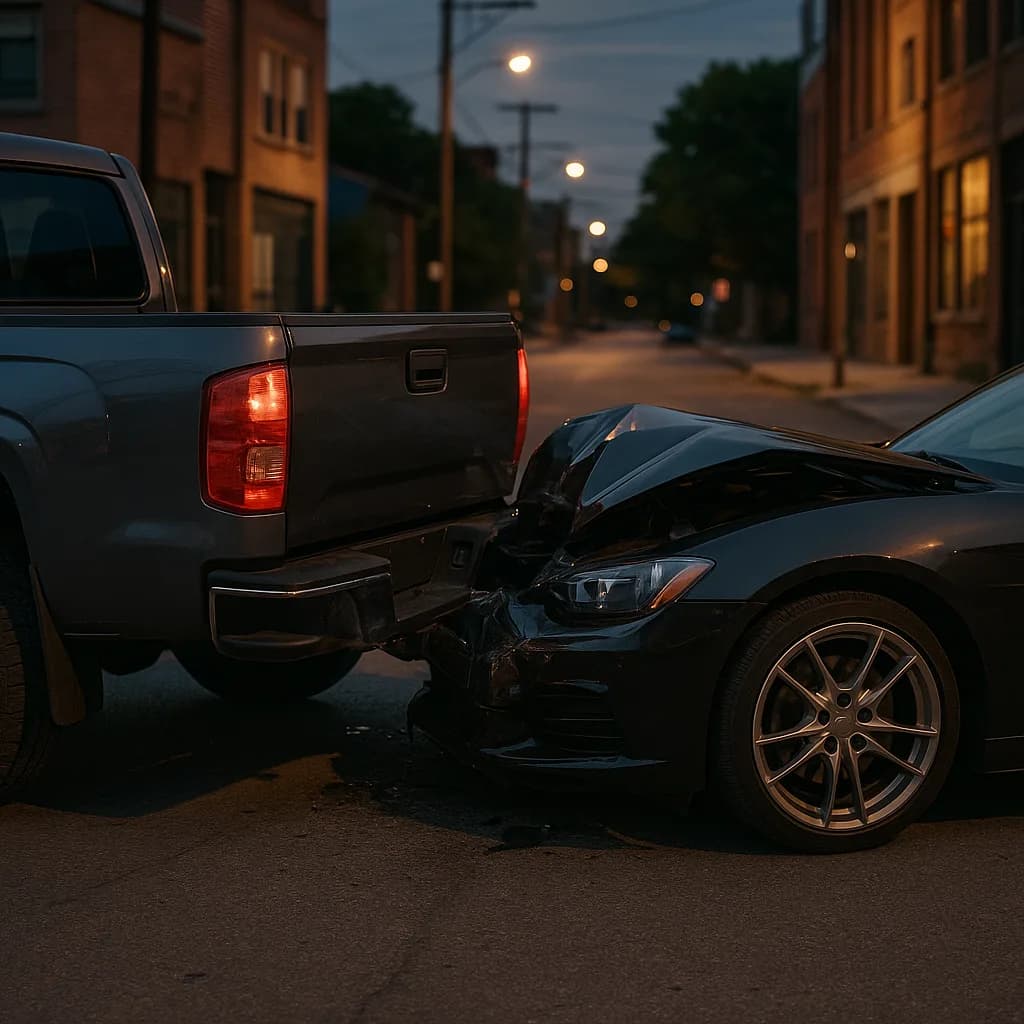
Senior drivers face a different break-even threshold than younger age groups when choosing between full coverage and liability only — lower annual mileage and higher collision claim frequency change the math entirely.
Why Age Changes the Coverage Break-Even Point
The standard rule that you should drop comprehensive and collision once your car's value falls below $4,000–$5,000 assumes uniform accident risk across age groups. It doesn't hold for drivers 65 and older. Insurance Institute for Highway Safety data shows drivers 70+ have collision claim rates comparable to drivers under 30, despite driving roughly 7,400 miles per year versus 12,400 for the general population.
This creates a paradox: lower exposure but higher per-mile risk. A paid-off 2015 sedan worth $6,500 might justify liability-only for a 45-year-old driver with the same vehicle, but for a 72-year-old, the expected collision claim cost over a three-year period can exceed the premium savings from dropping coverage.
The calculation shifts further when you factor in injury severity. NHTSA crash data indicates drivers 65+ are hospitalized at 2.3 times the rate of drivers 35–54 in comparable collisions, which correlates with higher comprehensive and collision claim payouts even in lower-speed incidents. Carriers price this into full coverage rates, but the alternative — paying repair costs out-of-pocket after a claim you're statistically more likely to file — often costs more over a 3-5 year vehicle ownership period.
Actual Premium Difference by Vehicle Value
Full coverage for a paid-off vehicle typically costs $85–$140/mo more than liability coverage alone for senior drivers, depending on the vehicle's actual cash value and the deductible selected. For a 68-year-old driver with a clean record in a mid-sized state like Ohio, dropping from full coverage to liability-only on a 2016 Honda Accord (valued around $8,200) saves approximately $105/mo with most major carriers.
That $1,260 annual savings sounds significant until you calculate expected claim frequency. If collision risk over three years is roughly 18–22% for this age group (versus 12–14% for drivers 40–60), and average collision repair cost for this vehicle type runs $4,100–$5,800, the expected three-year claim cost is $740–$1,276. The premium you'd pay over the same period for a $500 deductible is roughly $3,780, netting you protection against a $4,100+ loss for an effective cost of $2,500–$3,040.
The math flips once the vehicle value drops below $6,000–$7,000. For a 2012 Camry worth $5,400, that same $105/mo premium now represents nearly 24% of the car's total value annually. At this threshold, most senior drivers come out ahead by banking the premium savings and self-insuring the vehicle replacement risk.
Compare auto insurance rates in your state
Get matched with licensed carriers in minutes. One short form, real quotes, no obligation.
Get Your Free Quote✓ Free to Compare✓ No Obligation✓ Licensed Carriers✓ TCPA Compliant
When Liability-Only Actually Makes Sense
Three specific scenarios justify dropping full coverage even when your vehicle is worth $7,000 or more. First: you have accessible cash reserves equal to 200% of the vehicle's replacement value. If your 2015 Subaru is worth $7,800 and you maintain $15,000+ in liquid savings specifically allocated for vehicle replacement, the collision claim risk becomes manageable self-insurance.
Second: your annual mileage is below 3,000 miles and you avoid high-risk driving patterns entirely — no highway merging, no left turns across traffic at uncontrolled intersections, no night driving. Collision frequency scales almost linearly with these exposure factors. A senior driver who uses the vehicle only for weekday errands within a 5-mile radius reduces per-mile risk substantially.
Third: you're planning to replace the vehicle within 12–18 months regardless of condition. If you've already decided the current car is your last owned vehicle before transitioning to rideshare or family-assisted transport, paying $1,200–$1,500 for coverage that protects a depreciating asset you're exiting anyway rarely makes financial sense. The exception: if you'll be trading the vehicle in rather than scrapping it, collision damage directly impacts trade-in value and may justify maintaining coverage through the replacement process.
Coverage Adjustments That Split the Difference
Most senior drivers don't face a binary choice. Raising your collision deductible from $500 to $1,000 typically reduces premiums by $22–$38/mo while keeping catastrophic loss protection in place. For a vehicle worth $9,200, this creates a middle path: you're self-insuring the first $1,000 of damage (manageable for most budgets) while avoiding the scenario where a $6,800 repair bill forces a vehicle replacement decision under financial pressure.
Dropping comprehensive while keeping collision is another viable option if your vehicle is garaged and you live in a low-theft, low-weather-risk area. Comprehensive claims for seniors are typically weather-related (hail, falling branches) or theft. If your ZIP code shows below 2.5 property crime incidents per 1,000 residents and you have garage parking, comprehensive becomes lower-value coverage. Removing it saves $18–$34/mo while maintaining the higher-frequency collision protection.
Some carriers offer accident forgiveness riders specifically for senior drivers, typically priced at $6–$11/mo. This prevents your first at-fault collision from triggering a rate increase that would cost $180–$420 annually for 3–5 years. For drivers statistically more likely to file a collision claim, this rider often pays for itself if you remain with the same carrier for 4+ years.
How Medical Coverage Interacts With the Decision
If you carry Medicare Part B, you already have medical coverage that applies to auto accident injuries regardless of fault. This reduces the value of medical payments coverage (MedPay) and personal injury protection, but it doesn't change the collision coverage calculation — Medicare pays for your injuries, but it won't repair your vehicle.
The interaction matters when evaluating total premium spend. Some senior drivers drop MedPay entirely (saving $8–$15/mo) and apply that savings toward maintaining collision coverage on a paid-off vehicle. This rebalances the policy toward property protection rather than duplicating medical coverage you already carry through Medicare.
One exception: if you regularly transport passengers who are not Medicare-eligible (grandchildren, a spouse under 65), maintaining at least $5,000 in MedPay provides immediate coverage for their injuries without requiring them to file a claim through their own health insurance. This is particularly relevant in no-fault states where PIP coordination with Medicare can create coverage gaps for non-Medicare passengers.
Switching Timing and the Rate Lock Issue
If you're considering dropping full coverage, the decision point is your policy renewal date — not mid-term. Removing comprehensive and collision mid-policy triggers a recalculation but rarely results in a proportional refund because carriers recalculate the entire six-month premium based on coverage removal date, often using short-rate cancellation formulas that retain 10–15% of the unearned premium as an administrative fee.
Waiting until renewal also lets you compare what multiple carriers would charge for liability-only before making the change. Some carriers penalize drivers who drop coverage by categorizing them as higher-risk (the assumption being that only financially stressed drivers remove coverage), while others price liability-only policies neutrally. Shopping before you drop coverage reveals which carriers treat the change as risk-neutral.
One timing advantage seniors have: if you're dropping coverage on a vehicle worth $6,000–$8,000, you're likely 2–4 years away from vehicle replacement. Making the switch at renewal gives you 12 months to assess whether the savings accumulate as expected and whether your actual driving patterns match your projected mileage and risk exposure. If you file a claim in month three, you know immediately that your risk profile didn't match your assumptions and can reinstate full coverage at the next renewal without a coverage gap on record.