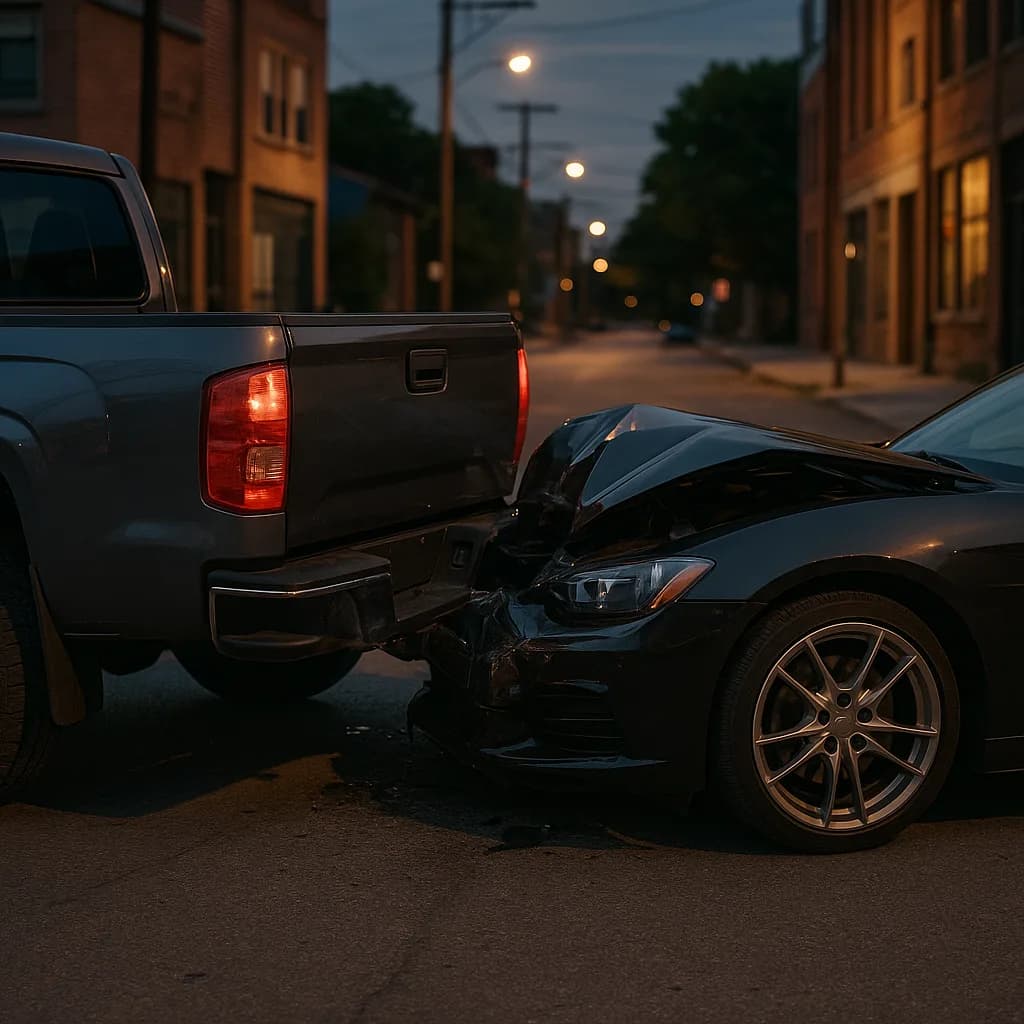
Most new car buyers don't need gap insurance after two years, but if you put less than 20% down or financed for 60+ months, you could be underwater for years. Here's how to calculate whether you're at risk.
What Gap Insurance Actually Covers — and What It Doesn't
Gap insurance pays the difference between what you owe on your car loan and what your car is actually worth if it's totaled or stolen. If you owe $22,000 on your auto loan but your car's actual cash value is only $18,000, gap insurance covers the $4,000 shortfall your standard collision and comprehensive policies won't touch.
Standard auto insurance pays only the depreciated market value of your vehicle at the time of loss. New cars lose 20–30% of their value in the first year and approximately 60% over five years, according to industry data. Your loan balance doesn't depreciate at the same rate, especially if you made a small down payment or chose a longer loan term.
Gap insurance does not cover engine failure, mechanical breakdowns, or damage you choose not to repair. It only activates when your primary insurance declares the vehicle a total loss. It also won't cover your deductible, overdue loan payments, or any amount you rolled over from a previous car loan into your current financing.
When You're Most Likely to Be Underwater on Your Loan
You're at highest risk of owing more than your car is worth if you put down less than 20%, financed for 60 months or longer, or bought a vehicle with steep first-year depreciation. Luxury sedans, electric vehicles with rapidly evolving technology, and models with poor resale ratings can lose value faster than you pay down principal.
Consider a driver who finances $30,000 at 7% APR for 72 months with zero down. After 12 months, they've paid roughly $5,100 total, but only about $1,900 went to principal. They still owe approximately $28,100, but the car may only be worth $21,000 to $24,000 depending on make and model. That's a gap of $4,100 to $7,100.
The risk shrinks over time as you build equity. Most borrowers reach break-even between months 24 and 36 if they made a standard down payment and chose a 60-month term. If you financed the entire purchase price or rolled negative equity from a trade-in into the new loan, you could remain underwater for 48 months or longer.
Compare auto insurance rates in your state
Get matched with licensed carriers in minutes. One short form, real quotes, no obligation.
Get Your Free Quote✓ Free to Compare✓ No Obligation✓ Licensed Carriers✓ TCPA Compliant
How Much Gap Insurance Costs and Where to Buy It
Dealerships typically charge $500 to $700 as a one-time fee added to your loan amount, but this is the most expensive option. Adding gap coverage to your existing auto policy costs approximately $20 to $40 per year or roughly $2 to $4 per month when bundled with collision and comprehensive coverage.
Buying through your insurer rather than the dealership can save you $400 to $600 over the life of a typical loan. The coverage is functionally identical. Some lenders and credit unions also offer gap insurance at rates competitive with insurers, often $200 to $300 as a flat fee.
You can cancel gap insurance once you owe less than the car's value. If you purchased it through the dealership and added it to your loan, you may be entitled to a prorated refund if you cancel early or pay off the loan ahead of schedule. Check your financing contract for cancellation terms.
Alternatives to Gap Insurance Worth Considering
Some lenders cap the gap insurance payout at 25% of the vehicle's actual cash value, meaning if you're severely underwater, you might still owe money after a total loss. New car replacement coverage offered by some insurers pays the cost of a brand-new equivalent model rather than depreciated value, which eliminates the gap without needing separate gap insurance.
New car replacement typically costs 15% to 20% more than standard collision coverage and usually expires after the first one to three years or when the odometer hits 15,000 miles, depending on the carrier. It's most valuable for drivers who bought new and want protection during the steepest depreciation window.
Another option: simply put 20% down and choose a loan term shorter than 60 months. This keeps you above water from day one in most cases and eliminates the need for gap coverage entirely. Run the numbers on your specific loan and vehicle depreciation curve before buying any additional coverage.
When Gap Insurance Is a Waste of Money
If you put down 20% or more and financed for 48 months or less, you likely won't be underwater at any point in the loan. Gap insurance makes no sense if you paid cash, leased the vehicle (gap is often included in lease contracts), or you're driving a car that's already paid off.
It's also unnecessary if your loan balance is already lower than your car's current market value. Check your loan payoff amount and compare it to your car's trade-in or private-party value using current market data. If the value exceeds what you owe by a comfortable margin, cancel the coverage and redirect that money toward your premium for collision or comprehensive.
Gap insurance also doesn't help if you don't carry collision and comprehensive coverage. Since gap only pays after your primary policy settles a total loss, you must maintain full coverage for the gap policy to function. Dropping to liability-only makes gap coverage worthless.
How to Decide If Gap Insurance Is Right for You
Calculate your current loan payoff amount and subtract your vehicle's actual cash value based on current market conditions and mileage. If the difference is more than $1,000 and you have more than 12 months left on your loan, gap insurance is worth the $2 to $4 per month most insurers charge.
If you're buying a new car and financing more than 90% of the purchase price, add gap coverage from day one. Remove it once you've crossed the break-even point, which you can estimate by reviewing your loan amortization schedule and tracking your car's depreciation using valuation tools.
Drivers with older vehicles, short loan terms, or substantial equity should skip gap insurance and focus on maintaining adequate liability, collision, and comprehensive limits. The goal is not to buy every coverage available — it's to cover the risks you actually face. compare quotes