Louisiana mandates liability coverage but allows lawsuits beyond policy limits. Here's what the law requires, what it doesn't cover, and how to close the gap.
What Coverage Does Louisiana Law Require?
Louisiana requires all drivers to carry liability insurance with minimum limits of $15,000 per person for bodily injury, $30,000 per accident for bodily injury, and $25,000 for property damage. This is commonly written as 15/30/25. The requirement applies to every registered vehicle, and proof of coverage must be presented at traffic stops, during vehicle registration, and after any accident.
Liability coverage pays for injuries and property damage you cause to others. It does not cover your own vehicle, your own injuries, or damage caused by uninsured drivers. The state minimum represents the floor, not a recommendation. Most carriers offer higher limits at modest premium increases.
Louisiana does not require collision, comprehensive, uninsured motorist, or medical payments coverage by statute. However, lenders require collision and comprehensive on financed vehicles, and uninsured motorist coverage is mandatory unless you decline it in writing.
How Louisiana's Tort System Expands Your Liability Exposure
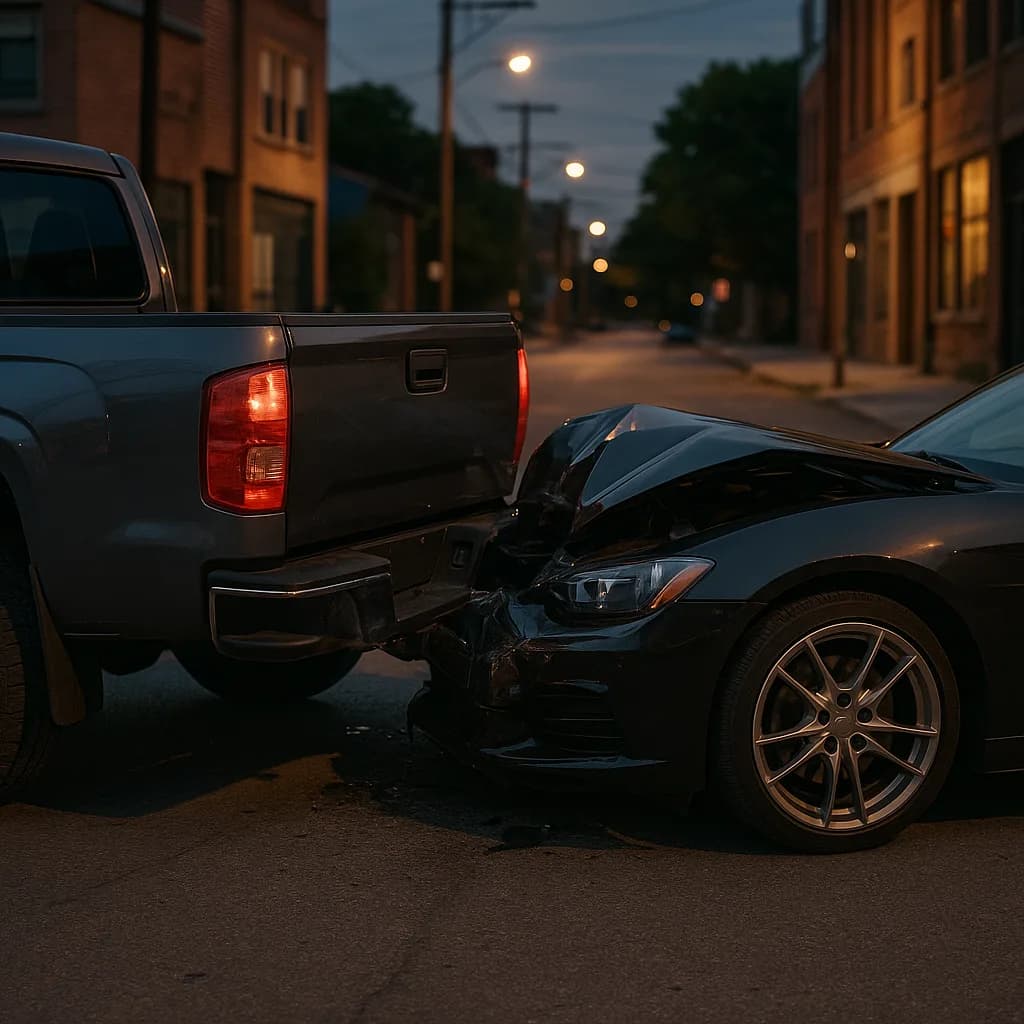
Louisiana operates under a pure comparative negligence system, which means injured parties can sue you for damages beyond your policy limits if your coverage is insufficient. If you cause an accident resulting in $80,000 in medical bills and property damage, your 15/30/25 policy pays only the first $15,000 per person and $25,000 for property damage. The injured party can pursue the remaining balance directly against your personal assets.
This creates a coverage gap that most drivers underestimate. Hospital stays, surgery, lost wages, and vehicle replacement costs routinely exceed state minimums. A single serious accident can result in a judgment that follows you for years, with wage garnishment and asset liens as enforcement mechanisms.
Carriers typically offer liability limits up to 100/300/100 or higher. The premium difference between state minimum and 50/100/50 coverage is often less than $20 per month, but the protection difference is substantial.
Compare auto insurance rates in your state
Get matched with licensed carriers in minutes. One short form, real quotes, no obligation.
Get Your Free Quote✓ Free to Compare✓ No Obligation✓ Licensed Carriers✓ TCPA Compliant
What Uninsured Motorist Coverage Protects Against
Louisiana law requires carriers to offer uninsured motorist coverage with the same limits as your liability policy. You must decline it in writing if you don't want it. This coverage pays for your injuries and vehicle damage when you're hit by a driver with no insurance or insufficient coverage.
Uninsured motorist coverage is particularly important in Louisiana, where approximately 12% of drivers operate without insurance despite the legal requirement. If an uninsured driver causes an accident that injures you or totals your vehicle, your own uninsured motorist policy steps in to cover the loss. Without it, your only recourse is suing the at-fault driver directly, which is often unproductive if they lack assets.
The coverage applies to hit-and-run accidents as well. If you're struck by a driver who flees the scene and cannot be identified, uninsured motorist coverage treats the claim as if the at-fault driver had no insurance.
When Collision and Comprehensive Coverage Become Necessary
Louisiana does not mandate collision or comprehensive coverage, but lenders require both on financed or leased vehicles. Collision pays for damage to your vehicle after an accident, regardless of fault. Comprehensive pays for theft, vandalism, weather damage, and animal strikes.
Once your vehicle is paid off, you can drop these coverages if the vehicle's value is low relative to the premium and deductible. A common threshold is dropping collision and comprehensive when the vehicle's market value falls below ten times the annual premium for those coverages. For a vehicle worth $3,000, paying $400 per year for collision with a $500 deductible leaves little room for net benefit.
If you drop collision and comprehensive, liability and uninsured motorist coverage remain in place. You're still protected against lawsuits and injuries caused by others. You simply accept the risk of paying out-of-pocket to replace your own vehicle after an at-fault accident or covered loss.
How to Prove Coverage and Avoid Penalties
Louisiana requires proof of insurance at traffic stops, during vehicle registration renewal, and after any accident. Acceptable proof includes a physical insurance card, a digital card displayed on your phone, or an electronic confirmation from your carrier. Officers and DMV staff verify coverage through the state's electronic insurance verification system.
Driving without insurance results in a fine of $500 to $1,000 for a first offense, vehicle impoundment, and license suspension. Reinstatement requires paying all fines, providing proof of coverage, and filing an SR-22 certificate with the Louisiana Office of Motor Vehicles for three years. The SR-22 is not a type of insurance but a filing that proves you carry at least state minimum coverage.
If your policy lapses, your carrier notifies the state electronically within days. The Office of Motor Vehicles suspends your registration and license until you reinstate coverage and pay reinstatement fees. Avoiding a lapse is significantly cheaper than recovering from one.